



Discover how the Deep-Sea Pressure Transmitter delivers centimeter-level precision depth reference for ROVs, AUVs, and subsea systems.
In the depths of the ocean, where satellite signals cannot reach, depth serves as the single most critical coordinate for subsea operations.
When a Remotely Operated Vehicle (ROV) hovers precisely above a subsea pipeline at 1,500 meters, when an Autonomous Underwater Vehicle (AUV) navigates the pitch-black abyss on a 72-hour autonomous survey, or when deep-sea landers record oceanographic data thousands of meters below—they all rely on one quiet essential: a reliable, high-precision vertical reference.
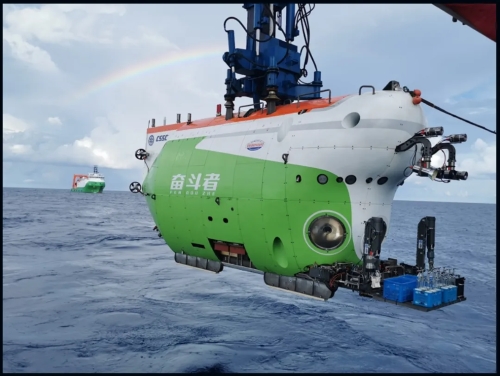
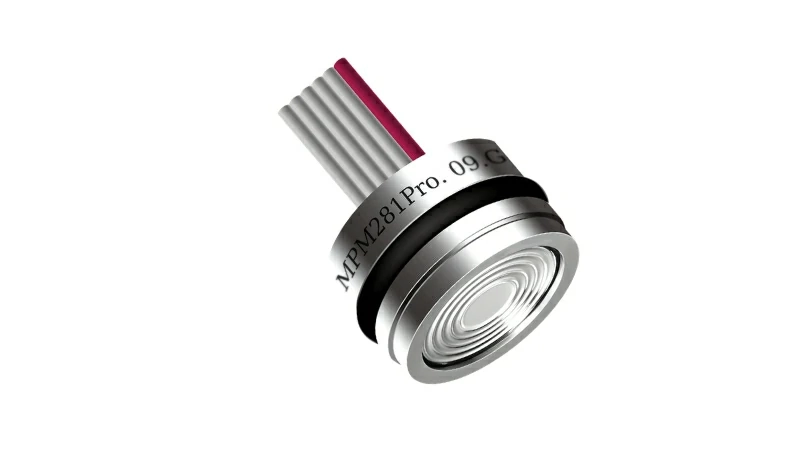
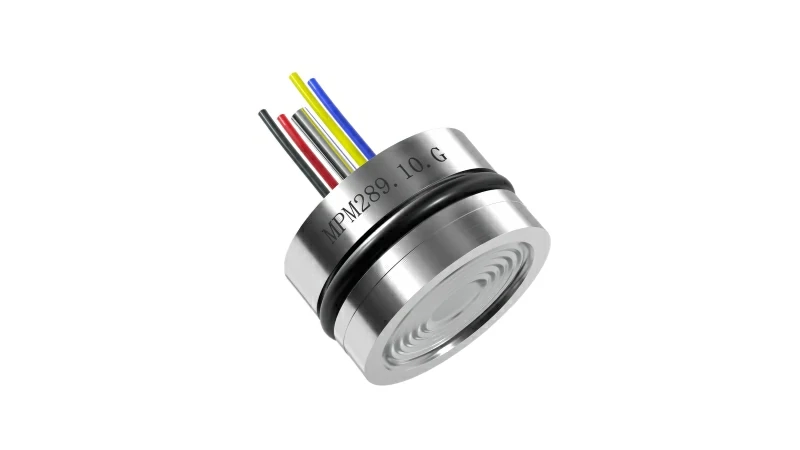
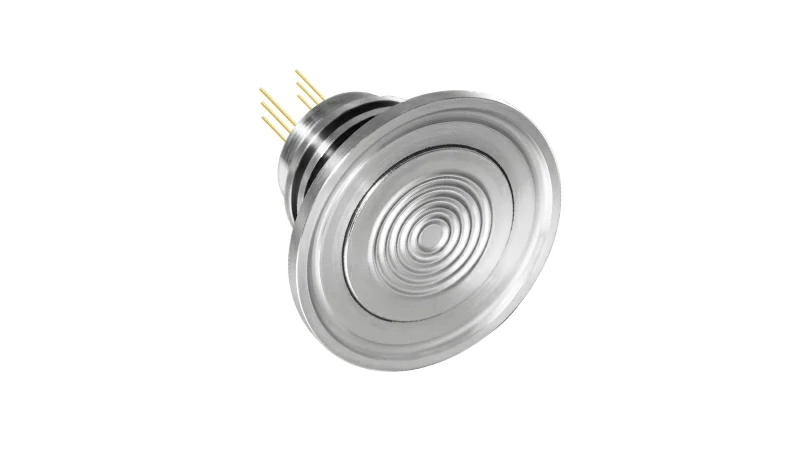
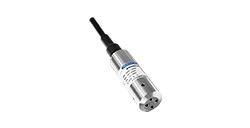
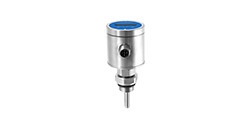
Introducing the MPM4779 Deep-Sea Pressure Transmitter—engineered specifically for underwater robotics, deep-sea exploration equipment, oceanographic buoys, and subsea beacons to deliver centimeter-level depth awareness in extreme subsea environments.
Why Depth Sensing Is the "Lifeline" of Subsea Systems
An exceptional subsea pressure transmitter does more than just answer "How deep am I?" The MPM4779 serves as the foundational data source supporting station-keeping hovering, terrain following, buoyancy control, and integrated navigation systems.
Key Applications: From Coastal Waters to the Deep Abyss
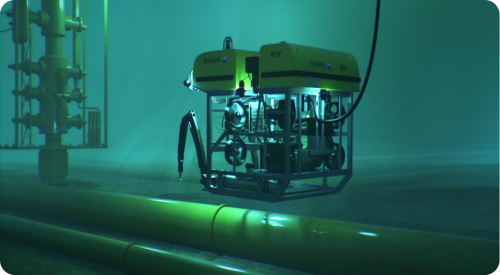
1. ROVs: Precision Station-Keeping and Subsea Inspection
Application Challenge: During subsea pipeline inspections or platform structural audits, ROVs must maintain a constant depth amid complex hydrodynamic currents. Minor depth deviations can cause optical cameras to drift off-target or mechanical manipulators to collide with subsea structures.
MPM4779 Value:
•Centimeter-Level Hovering: Delivers real-time, high-precision depth telemetry to the control loop, enabling stable subsea hovering down to centimeters.
•Terrain-Following Integration: Fuses with altimeter data for smooth seabed tracking, dynamically adapting to bathymetric fluctuations.
•Safe Deployment & Recovery: Provides precise vertical reference data during Launch and Recovery System (LARS) operations, safeguarding equipment during mother-ship deployment.
Typical Operations: 1,500m-class subsea oil & gas pipeline inspections, offshore wind monopile audits, and dam structural inspections.
2. AUVs: Depth Baseline for Autonomous Navigation
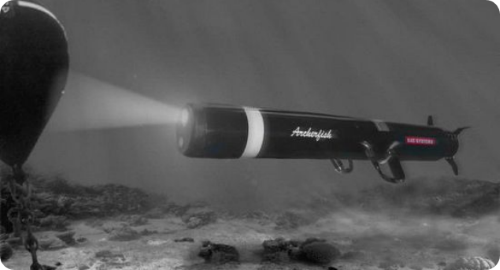
Application Challenge: Once submerged, AUVs operate completely untethered. All guidance decisions rely on onboard instrumentation. Unbounded depth errors propagate into horizontal position drift, risking mission failure or equipment loss.
MPM4779 Value:
•Navigation Error Suppression: Serves as a vertical reference constraint for integrated Inertial Navigation Systems (INS) and Doppler Velocity Logs (DVL), preventing navigation drift from diverging.
•Stratified Sampling Triggers: Triggers multi-layer sampling protocols upon reaching target depths—automatically deploying water samplers, sediment corers, or acoustic arrays.
•Ultra-Low Power Profile: Designed for optimized power efficiency to support continuous AUV missions exceeding 72 hours.
Typical Operations: Bathymetric mapping, underwater mine countermeasures (MCM), deep-sea hydrothermal vent surveys, and microplastic monitoring.
3. Deep-Sea Exploration: Automated Triggers for Landers and Samplers
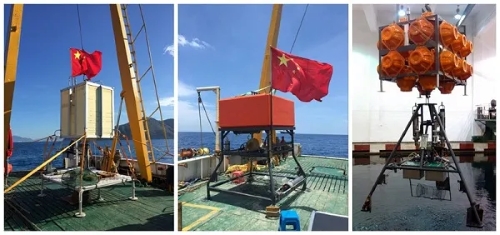
Deep-sea landers, benthic samplers, and seafloor observation nodes rely on precise vertical depth thresholds for long-term seabed deployment or scheduled wake-up functions.
MPM4779 Value:
•Automated Action Triggers: Accurately determines ascent and descent phases to trigger mechanical ballast release or fluid sampling systems.
•Pressure-Threshold Wake-Up: Conserves power by keeping onboard camera suites and sensor arrays in sleep mode until preset depth/pressure thresholds are reached.
•Long-Term Trend Monitoring: Tracks subtle depth variations over extended deployments, assisting in sediment accumulation analysis and seafloor deformation monitoring.
Typical Operations: 6,000m-class benthic biological landers, abyssal marine research, and seabed seismic monitoring nodes.
Engineering Excellence Behind the MPM4779
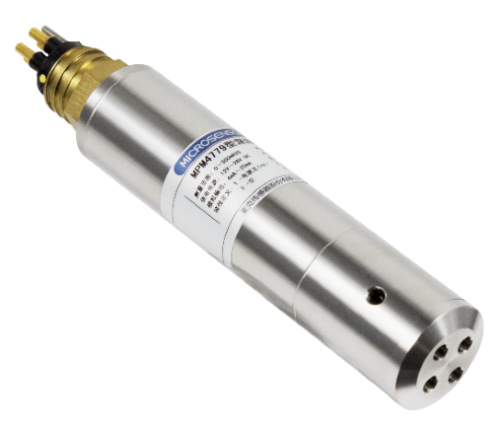
Engineered to withstand extreme subsea hydrostatic pressure, freezing temperatures, highly corrosive saline environments, and long-duration deployments, the MPM4779 Deep-Sea Pressure Transmitter features key breakthroughs in precision stability, environmental ruggedness, system integration, ultra-low power consumption, and full-ocean-depth sealing technology—ensuring error margins remain strictly within centimeters.
As the global blue economy accelerates—from subsea energy networks to full-ocean-depth scientific frontiers—precise depth perception remains the primary key to mastering the deep ocean.
The MPM4779 is designed to be the most quiet, reliable, and precise component on your subsea platform—unobtrusive, but always accurate.
 Copyright © 2026 MICRO SENSOR CO., LTD


