
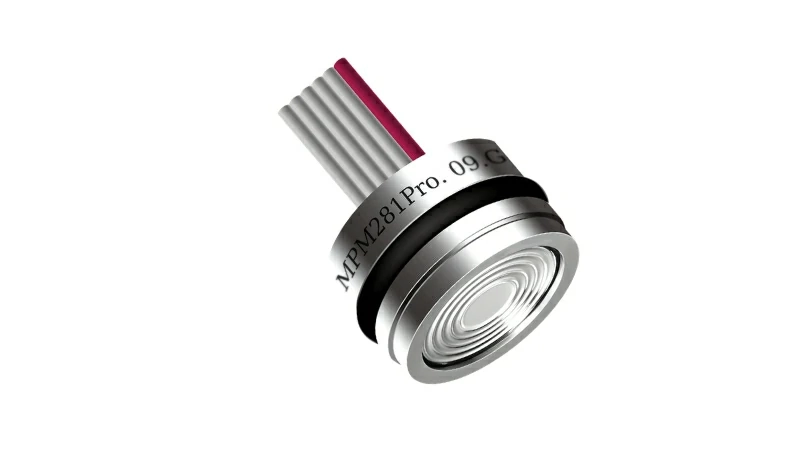
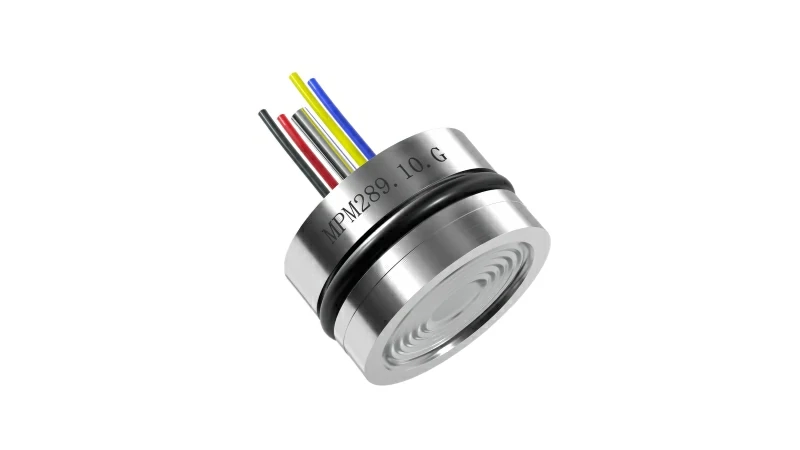
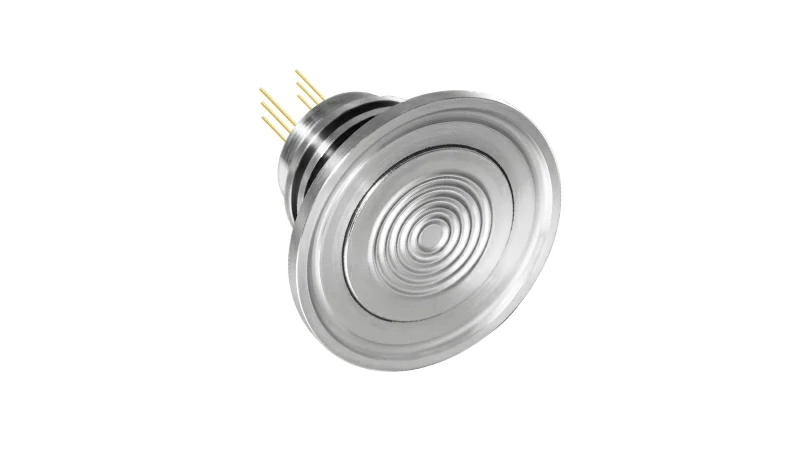
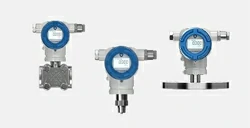
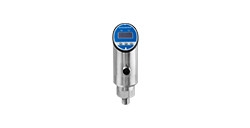
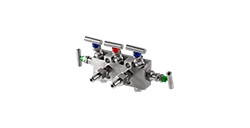
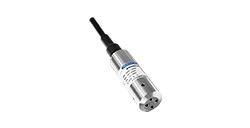














The diffused silicon pressure transmitter has become the preferred measuring instrument due to its high accuracy and long-term stability. What makes diffused silicon type superior to other technologies, and how does it perform in various environments? We will dive deep into its working principles, core advantages, and FAQs. If you are wondering whether silicon technology is the right fit for your specific application—from oil pipelines to water treatment—this article provides the technical clarity you need.
From Diffusion Process to Diffused Silicon Transmitters
What is Diffused Silicon?
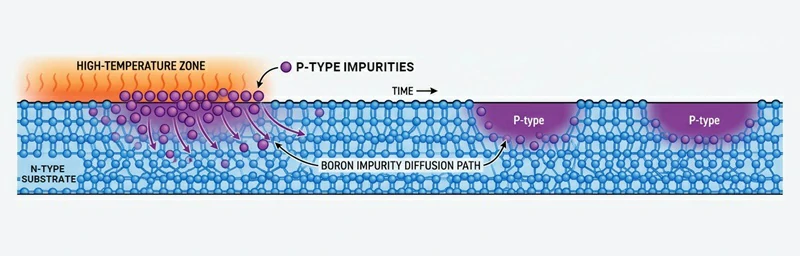
Diffused silicon is created through a process called ion diffusion. Specific P-type impurities (typically boron, represented by the purple spheres) are "diffused" into the high-purity N-type monocrystalline silicon wafer substrate at high temperatures.
How Diffused Silicon Empowers the Pressure Transmitter
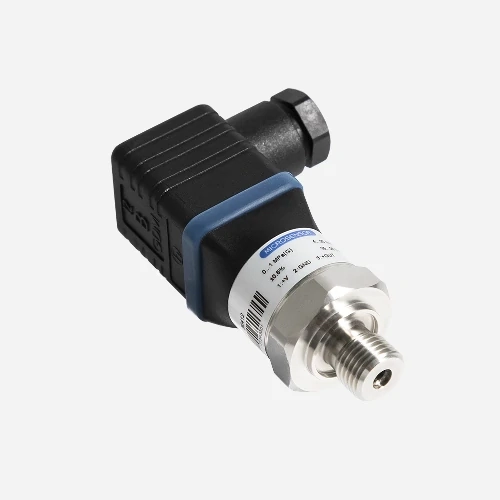
The heart of a standard diffused silicon pressure transmitter is a diffused silicon die. As mentioned above, the diffused process creates four ultra-thin resistors integrated directly into the silicon crystal lattice. These resistors form a Wheatstone Bridge circuit, which drives the sensor's ability to detect physical changes.
The silicon die is encapsulated within an oil-filled chamber and protected by a 316L stainless steel isolation diaphragm. This design ensures that the sensitive "diffused" resistors are not in direct contact with harsh process media.
This diffusion-based technology provides the pressure sensor with a distinct mechanical advantage over traditional bonding methods:
✅ Atomic-Level Bond Stability: Unlike traditional strain gauges that are bonded via adhesives, diffused resistors are monolithic, which are an intrinsic part of the silicon substrate. This eliminates "mechanical creep" and hysteresis caused by adhesive aging or fatigue, ensuring the sensor maintains a stable zero point over millions of pressure cycles.
✅ Enhanced Piezoresistive Efficiency: The diffusion process optimizes the Gauge Factor of the silicon. When the crystal lattice undergoes microscopic deformation, the change in electrical resistivity is significantly more pronounced than in metal foil gauges—often by a factor of 50 to 100.
✅ High Stability in Compact Designs: Because silicon is an incredibly stable semiconductor, diffused silicon transmitters can be manufactured in very small sizes without accuracy loss.
Diffused Silicon Pressure Transmitter vs. Monocrystalline Silicon Pressure Transmitter
It is important to clarify that monocrystalline silicon is the raw material, while diffused silicon is the result of a specific process applied to monocrystalline silicon material. In the industrial pressure measurement instruments, there is often a distinction between diffused silicon transmitters and monocrystalline silicon transmitters. Here is a technical comparison:
Technical Dimension | Diffused Silicon Pressure Transmitter | Mono-crystalline Silicon Pressure Transmitter |
| Structure | Direct Oil-filled: The chip is fixed directly to the base; compact and simple structure. | Suspended Design: The sensing element is a "Suspended" or "Twin-beam" design to isolate it from external mounting stress. |
| Feature | Fast response, compact size, cost-effective. | Extreme accuracy, long-term stability, high overpressure resistance. |
| Accuracy | ±0.25% FS, ±0.5/%FS | Up to ±0.05%FS, ±0.075%FS |
| Long-term Stability | Good, Approx. ±0.2%FS/year | Superior, ±0.1% Span/10 years |
| Typical Application | General Industry: Hydraulics, Mobile Elevating Work Platforms (MEWPs), HVAC, Water Treatment, Compressors, etc. | Process Industry: Oil & Gas, Fine Chemicals, Power Plants, SOFC Fuel Cells, High-precision DP flow measurement, etc. |
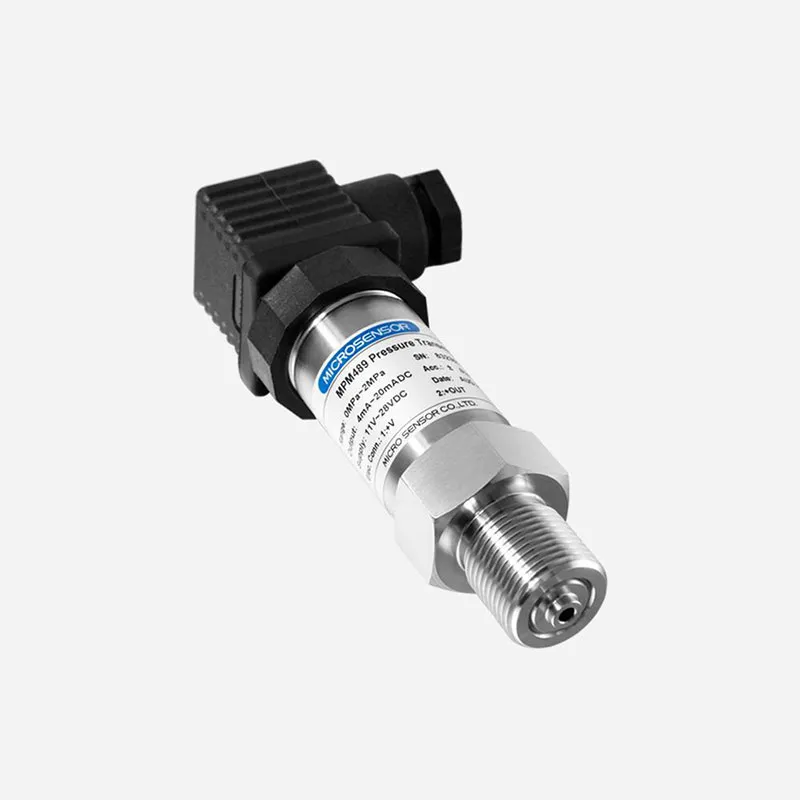
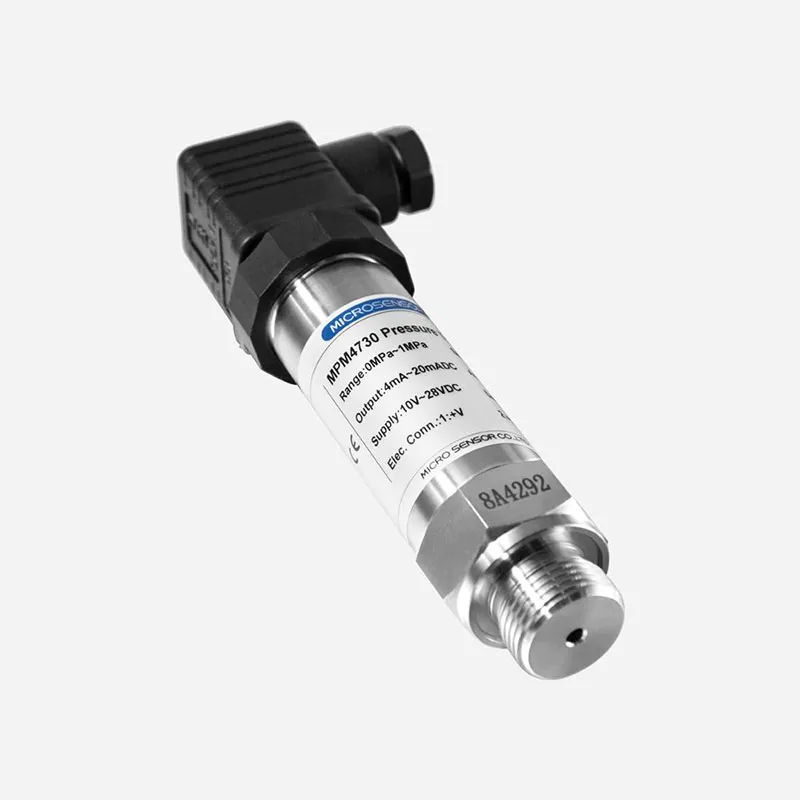
| Recommended Model | MPM489, MPM4730, M20 | MDM7000 Series |
At MICROSENSOR, we provide a comprehensive portfolio covering both diffused silicon and monocrystalline silicon technologies. Whether your project demands the rapid response and cost-efficiency of our diffused silicon pressure transmitters for OEM equipment, or the extreme precision and long-term stability of monocrystalline pressure transmitters for critical process control, we have the expertise to deliver.
FAQs of Diffused Silicon Pressure Transmitters
Q: What is a Diffused Silicon Pressure Transmitter?
A: It is a measurement instrument that utilizes the piezoresistive effect of mono-crystalline silicon material to convert pressure signals into standardized electrical signals, such as 4-20mA.
Q: What is the core working principle of a Diffused Silicon Pressure Transmitter?
A: It is based on the piezoresistive effect. When the mono-crystalline silicon diaphragm deforms under pressure, the resistance values of the diffused resistors on its surface change. This resistance variation is then converted into a voltage signal proportional to the pressure through a Wheatstone Bridge.
Q: What are the main differences between Diffused Silicon and Capacitive pressure transmitters?
A: Diffused silicon technology is based on the piezoresistive effect, offering fast response times and high cost-efficiency. Capacitive technology is based on changes in capacitance; while it often provides higher precision and long-term stability in specialized applications, it typically comes with a higher cost.
Q: Can a Diffused Silicon Pressure Transmitter measure static pressure?
A: Yes. Unlike piezoelectric sensors, which can only measure dynamic pressure changes, diffused silicon transmitters can accurately measure both static and dynamic pressure.
Q: What are the main components of a Diffused Silicon Pressure Transmitter?
A: It primarily consists of the pressure sensor (diffused silicon core), signal processing circuitry, process connection (housing), and electrical interface.
Q: What materials are typically used to manufacture the diffused silicon core?
A: The core sensing element is made of mono-crystalline silicon. The isolation diaphragm is usually 316L stainless steel, and the internal filling fluid is silicone oil.
Q: What types of pressure can a Diffused Silicon Pressure Transmitter measure?
A: They can measure Gauge Pressure (G), Absolute Pressure (A), and Sealed Gauge Pressure (S).
Q: Can Diffused Silicon Pressure Transmitters measure corrosive media?
A: Standard versions equipped with a 316L diaphragm are not suitable for highly corrosive media. For such applications, appropriate diaphragm materials (e.g., Tantalum or Hastelloy) must be selected based on the specific medium.
Q: What is the temperature endurance range for a standard diffused silicon core?
A: The standard operating temperature range is typically -20°C to 85°C.
Q: What is the standard accuracy of a Diffused Silicon Pressure Transmitter?
A: The standard accuracy class is generally 0.5% FS (Full Scale).
Diffused Silicon Pressure Transmitters from MICROSENSOR
With over five decades of experience in manufacturing industrial measurement instruments, our diffused-silicon pressure transmitter solutions are proven in diverse applications—general hydraulics, pipeline and storage tank monitoring, HVAC systems, maritime engineering, water treatment, and even in demanding environments.
The suitable pressure measurement instruments are more than a technical decision—it is a commitment to operational safety and efficiency. Our team of experts is ready to assist you in selecting the optimal specifications and parameters to ensure your project's success.
 Copyright © 2026 MICRO SENSOR CO., LTD


