
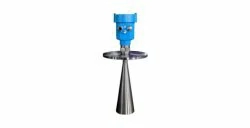
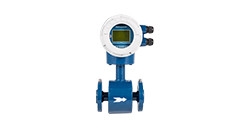






As AI and HPC workloads continue to drive rack power densities higher, liquid cooling is becoming a standard part of modern data center infrastructure. At the heart of many liquid cooling systems is the Coolant Distribution Unit (CDU), responsible for delivering coolant at the right flow, pressure, and temperature to IT equipment. While pumps and heat exchangers often receive most of the attention, sensors are what provide the operational visibility needed to keep a CDU running efficiently.
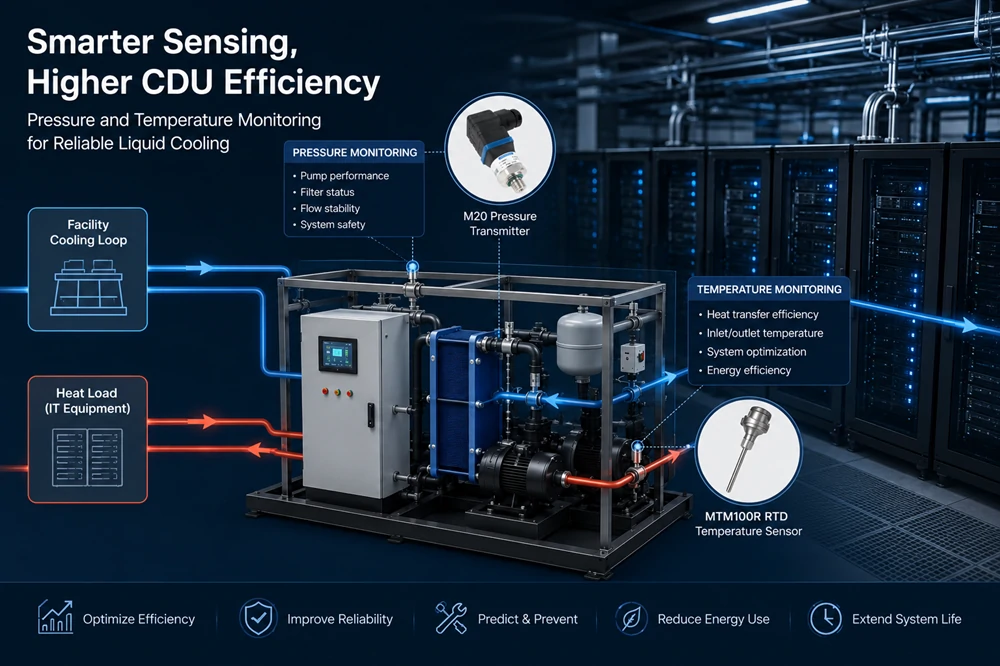
Pressure Monitoring
Stable flow is essential for effective heat removal. In a CDU, pressure sensors are commonly installed around pumps, filters, and distribution loops to help operators understand what is happening inside the system.
A gradual increase in pressure drop across a filter, for example, often indicates contamination buildup long before cooling performance is affected. Pressure data can also reveal pump degradation, valve issues, or flow restrictions that may otherwise go unnoticed.
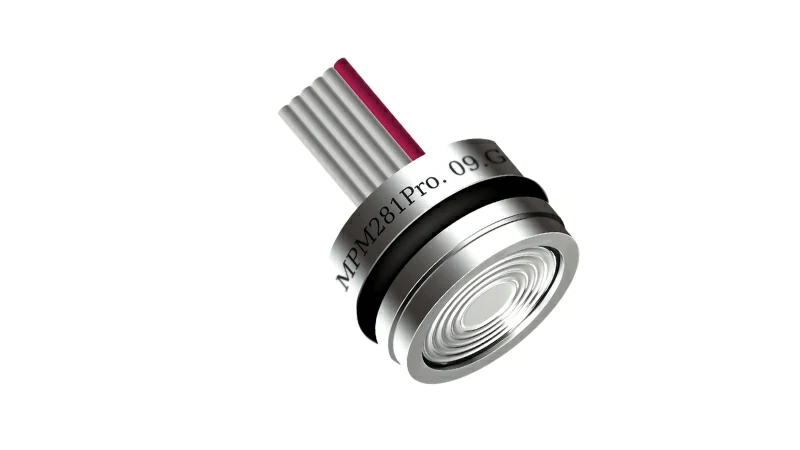
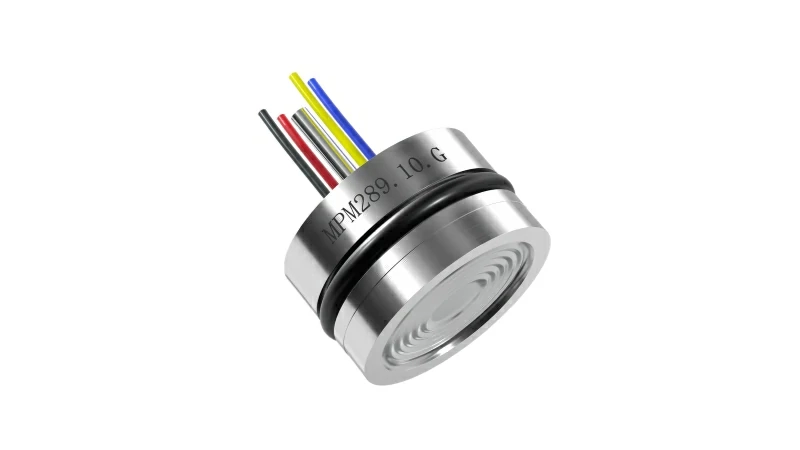
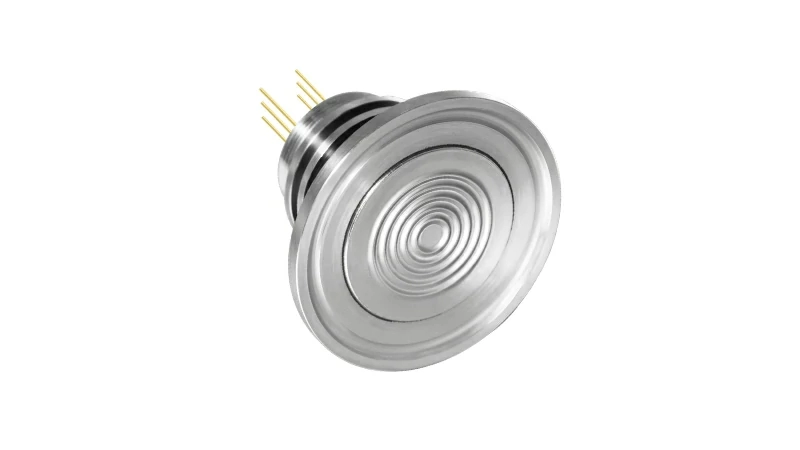
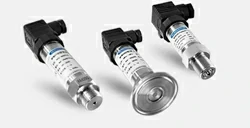
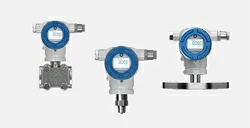
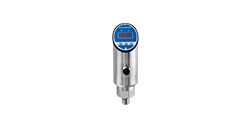
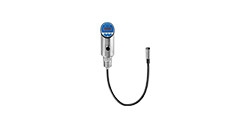
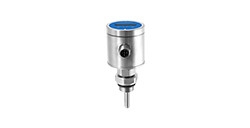
General-purpose industrial transmitters such as the M20 Pressure Transmitter are well suited for these applications, providing reliable pressure monitoring for coolant loops, pumps, and filtration systems operating continuously in data center environments.
Temperature Monitoring
If pressure tells you how coolant is moving, temperature tells you how effectively heat is being removed.
By monitoring coolant temperatures at the CDU inlet and outlet, operators can evaluate heat exchanger performance and track thermal loads across the system. This becomes especially important in AI clusters, where power consumption and heat generation can change rapidly during training workloads.
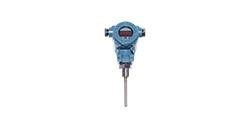
RTD-based solutions such as the MTM100R Temperature Sensor are often used for supply and return temperature measurement because of their accuracy, response speed, and long-term stability.
The Value of Combining Pressure and Temperature Data
While individual sensors provide baseline visibility, the true engineering value in modern Coolant Distribution Unit (CDU) design lies in analyzing both metrics together. By correlating pressure and temperature in real time, operators can spot potential risks early and take action before system performance or server uptime is compromised. It gives data center operators the confidence to run high-density AI clusters safely, efficiently, and with maximum uptime.
Detecting Hidden Blockages Early
If pressure drop across a loop is rising while return coolant temperature is also creeping up, the system isn't just running warmer—it is actively struggling with a flow restriction (such as a clogging filter or cold plate microchannel). Catching this early allows for planned maintenance before servers overheat and throttle down.
Adapting to AI Workload Spikes
During heavy AI training workloads, server power and heat generation can spike in seconds. When the CDU sees temperature rising alongside a pressure drop, it knows the cooling loop needs more flow immediately. Smart systems can automatically ramp up pump speeds to deliver precise cooling right when and where it’s needed most.
Preventing Equipment Damage
Unusual pressure swings paired with unstable coolant temperatures are clear warning signs of pump issues (like air pockets or cavitation). Identifying these combined signals allows the CDU to adjust system pressure automatically or trigger a backup pump—protecting expensive hardware from permanent damage.
Final Thoughts
As liquid cooling scales across modern data centers, high-precision pressure and temperature monitoring have shifted from secondary considerations to mission-critical imperatives. In liquid cooling systems, better data ultimately leads to better cooling performance. Advanced sensing solutions from MICROSENSOR deliver the accurate, real-time data essential to ensuring hydraulic flow stability, maximizing heat dissipation efficiency, and protecting long-term system reliability.
Recommended Reading:
Solution Page: Instrument Solutions for Data Center
Download Catalog: Instrumentation Solutions for HVAC Liquid Cooling Systems
Blog:
M20H Pressure Transmitter for Liquid Cooling CDU Systems
Pressure Transmitters for Coolant Distribution Units in Data Centers


 Copyright © 2026 MICRO SENSOR CO., LTD


